
India's manufacturing sector growth eased slightly in July, on softer increases in new orders and output, while cost pressures and demand strength led to the steepest increase in selling prices since October 2013, a monthly survey said on Thursday. The seasonally adjusted HSBC India Manufacturing Purchasing Managers' Index (PMI) moderated slightly from 58.3 in June to 58.1 in July.

'We will be very, very proactive in providing whatever liquidity requirements are needed.'

India has managed high government debt-to-GDP, a slowing domestic revenue engine, lower household savings and a more hostile geopolitical environment separately in the past. But together, they threaten to undo the growth narrative on which today's optimism rests, warns Debashis Basu.
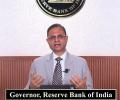
'India has the potential to grow at more than 7%, with the monetary policy providing a supportive hand.'

Indian economy is in a sweet spot, with a mix of solid growth and moderating inflation, Moody's Ratings said, forecasting a 7.2 per cent GDP growth in the 2024 calendar year and 6.6 per cent in the next. In its Global Macro Outlook 2025-26, the rating agency said the global economy has shown remarkable resilience in bouncing back from supply chain disruptions during the pandemic, an energy and food crisis after the Russia-Ukraine war began, high inflation and consequent monetary policy tightening.

Retail inflation in August rose slightly to 2.07 per cent from 1.61 per cent in the preceding month, mainly due to increase in prices of vegetables, meat and fish, according to a government data released on Friday.

S&P Global Ratings on Tuesday retained India's growth forecast at 6.8 per cent for the current fiscal and said it expects the RBI to start cutting interest rates in its October monetary policy review. In the economic outlook of Asia Pacific, S&P Global Ratings also retained its GDP growth forecast for the 2025-26 fiscal at 6.9 per cent and said solid growth in India will allow the Reserve Bank to focus on bringing inflation in line with its target.

The weakening of inflation, prospects of economic growth, geopolitical uncertainty and comfortable system liquidity may result in the Reserve Bank of India's (RBI) Monetary Policy Committee (MPC) to cut the repo rate by another 25 basis points, opine top economists. They also said the external economic pressures like trade policies and others would require continued RBI's accommodative stance and policy support for the Indian industry to sustain the growth.
The RBI on Wednesday slashed key interest rate by 25 basis points, for the second time in a row, to support a shuttering economy hit by reciprocal tariffs imposed by the US. Following the rate cut, the key policy rate eased to 6 per cent providing relief to home, auto and corporate loan borrowers.

Plans for big bang reforms in the GST regime by Diwali, the Putin-Trump summit and S&P upgrading India's sovereign credit rating are likely to instil optimism in the domestic equity market in the week ahead, analysts said. Besides, trends in global markets and the trading activity of foreign investors would also impact domestic investors' sentiment.

The Reserve Bank of India (RBI) on Tuesday announced a fresh round of liquidity measures through open-market operations (OMOs) and a foreign exchange buy-sell swap, under which it will inject close to Rs 3 trillion into the banking system. The central bank said it would purchase Government of India securities worth Rs 2 trillion through OMOs, spread across four tranches of Rs 50,000 crore each to be conducted on December 29, January 5, January 12 and January 22.

Richard Clarida's recent paper could be key for policymakers in deciding whether India should move to an 'inflation targeting policy regime', says Vivek Dehejia.

'Once bitten, twice shy, I didn't take up the challenge this time...' 'I realised I had failed to follow my karma because I feared failure.'

The Reserve Bank of India (RBI) is expected to cut interest rates for the first time in nearly five years in Governor Sanjay Malhotra's first monetary policy committee (MPC) meeting on Wednesday. The meeting of the six-member MPC, which will culminate on Friday, aims to boost sluggish economic growth, which is seen falling to a four-year low. Malhotra took charge as the 26th RBI governor in December last year.

State Bank of India, Adani Ports, Tata Consultancy Services, ICICI Bank, Reliance Industries and PowerGrid were also among the laggards.

'The statistical confidence bands of the fan charts of the forecasts will provide a better sense of the potential variability of outcomes.'
Reserve Bank of India (RBI)Governor Sanjay Malhotra on Friday said it was not the regulator's job to take decisions for bank boards, speaking in the context of the wide range of enabling reforms announced for lenders during the October monetary policy review, and emphasised that financial stability remained the regulator's focus.

Equity markets this week will turn their focus on the RBI's interest rate decision, Q1 earnings from several blue-chip firms and tariff-related news for further cues, analysts said. Moreover, trading activity of foreign investors and trends in global equity markets will also drive investors' sentiment.

S&P Global Ratings on Tuesday cut India's GDP growth projections to 6.5 per cent for the next fiscal as it expects that economies in the APAC region will feel the strain of rising US tariffs and pushback on globalisation. In its Economic Outlook for Asia-Pacific (APAC), S&P said despite these external strains, it expects domestic demand momentum to remain solid in most emerging-market economies.

Led by a sharper-than-expected deceleration in industrial activity, economic growth in India slowed more than anticipated and is projected to remain at 6.5 per cent till 2026, the International Monetary Fund said on Friday. "Growth in India slowed more than expected, led by a sharper-than-expected deceleration in industrial activity," the IMF said in its latest update of the World Economic Outlook, according to which the global economy is holding steady. In 2023, India's growth rate was 8.2 per cent, which dropped to 6.5 per cent in 2024.

The wholesale price inflation rose to 1.84 per cent in September as food items, especially vegetables, turned costlier, as per the government data released on Monday. The wholesale price index (WPI)-based inflation was 1.31 per cent in August. It was (-)0.07 per cent in September last year.

What appeared to be a generous act of friendship was, in truth, a manoeuvre within a much larger strategic game. The United States used the 1962 war not just to aid India but to test how far it could be pulled into the Western fold, points out Dr Kumar.

Titan, Nestle, Hindustan Unilever, State Bank of India, Larsen & Toubro, ITC, Zomato and Bajaj Finserv were also among the laggards. Adani Ports, IndusInd Bank, Tata Motors and HDFC Bank were among the major gainers.

The Reserve Bank's rate-setting panel began its three-day deliberations on Monday to decide the next monetary policy amid expectations that the central bank will maintain status quo on the benchmark interest rate in the backdrop of global scare due to the new coronavirus variant Omicron. Reserve Bank Governor Shaktikanta Das headed six-member Monetary Policy Committee (MPC) is scheduled to announce the policy resolution on Wednesday. If the RBI maintains status quo in policy rates on Wednesday, it would be the ninth consecutive time since the rate remains unchanged.

Reserve Bank on Wednesday cut India's growth forecast to 6.5 per cent from 6.7 per cent estimated earlier for the current financial year on account of impact of global trade and policy uncertainties. Prospects of agriculture sector remain bright on the back of healthy reservoir levels and robust crop production in 2025-26, RBI Governor Sanjay Malhotra said while unveiling the outcome of the first bi-monthly Monetary Policy Committee meeting for the current financial year.

The Reserve Bank is unlikely to cut the benchmark interest rate in its forthcoming bi-monthly monetary policy review later in the week as retail inflation is still a cause of concern, and there is a possibility of the Middle East crisis deteriorating further, impacting crude oil and commodity prices, say experts.

India continues to remain an attractive investment destination and rise in repatriation of funds is a sign of a mature market where foreign investors can enter and exit smoothly, Reserve Bank Governor Sanjay Malhotra said on Friday. Gross foreign direct investment (FDI) inflows remained strong, rising by around 14 per cent to $81 billion in 2024-25, from $71.3 billion a year ago.

'Maybe he was wrong, but they believed he genuinely meant what he said.'

Sanjay Malhotra takes charge as the 26th RBI governor at a time when headline retail inflation has shot up to 6.2%.
The RBI under former governor Shaktikanta Das resisted pressures to cut interest rates through 2024 as it kept its 'Arjuna's eye' trained on inflation, but the central bank under a new detail-oriented head will soon have to take a call if it can continue sacrificing growth. Das, a career bureaucrat who in 2016 oversaw Prime Minister Narendra Modi's highly disruptive demonetisation move, left a lasting legacy as he demitted office towards the end of 2024 after expertly navigating monetary policy for six years, the highlight of which was steering India's recovery through the pandemic.

The move is aimed at making settlement of claims or return of articles from a locker smooth for relatives after the death of a customer.
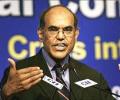
A revival in investment activity, which is key to stimulating growth, depends particularly on the recent policy announcements by the government being translated into effective actions, Subbarao said while announcing the second quarterly review of the monetary policy.

Benchmark Sensex advanced 110 points in a choppy trade on Wednesday, extending its gains to the fourth day in a row helped by buying in HDFC Bank, ICICI Bank and fresh foreign fund inflows. The 30-share barometer rose by 110.58 points or 0.14 per cent to settle at 80,956.33 with 14 of its constituents ending with gains and 16 stocks with losses. During the day, it jumped 399.64 points or 0.49 per cent to 81,245.39 and dipped to a low of 80,630.53.

'If it doesn't, it will continue with measures to infuse liquidity, signalling a new cycle,' predicts Tamal Bandyopadhyay.

State-owned Bank of Baroda (BoB) on Sunday said it has cut its benchmark lending rate linked to repo rate by 50 basis points in line with the RBI's rate reduction. Meanwhile, private sector HDFC Bank reduced its Marginal Cost of Funds-based Lending Rates (MCLR) by 10 basis points across tenure, which will benefit borrowers whose loans are linked to this benchmark.

Wholesale price inflation moderated to 2.31 per cent in January due to the decline in prices of food items especially vegetables, government data released on Friday showed. The Wholesale Price Index (WPI) based inflation was 2.37 per cent in December 2024. It was 0.33 per cent in January 2024.

Shaktikanta Das will demit the office on Tuesday after completing six years as the 25th Governor of the Reserve Bank of India. Revenue Secretary Sanjay Malhotra will replace him as the 26th Governor. He was appointed as the Governor on December 12, 2018, after the abrupt exit of Urjit Patel.
Days after the US Fed raised the interest rate, the RBI may go in for its third consecutive policy rate hike by at least 35 basis points to check high retail inflation, experts said. The central bank has already announced to gradually withdraw its accommodative monetary policy stance. The Reserve Bank of India's rate-setting panel -- the Monetary Policy Committee -- will meet for three days from August 3 to deliberate on the prevailing economic situation and announce its bi-monthly review on Friday.

Gold prices on Tuesday surged Rs 723 to touch an all-time high of Rs 110,312 per 10 grams in the domestic futures market, tracking strong global cues amid growing expectations of a US Federal Reserve interest rate cut next week. Traders said weak US labour market data has strengthened the case for monetary policy easing, putting pressure on the dollar and boosting demand for the safe-haven asset.
'Growth, liquidity and deposit mobilisation are likely to be discussed during the interaction.'
